Jeff KassoufMay 27, 2026, 07:18 AM ETCloseJeff Kassouf covers women's soccer for ESPN, focusing on the USWNT and NWSL. In 2009, he founded The Equalizer, a women's soccer news outlet, and he previously won a Sports Emmy at NBC Sports and Olympics.
The National Women's Soccer League is no longer in start-up phase. To borrow Silicon Valley lexicon -- as the NWSL tends to do -- the league finds itself somewhere in between the growth stage and the expansion stage of its booming business.
Rapid expansion and commercialization are both necessary to the NWSL's long-term growth and the very characteristics that will challenge its core identity. Nothing about this Catch-22 is unique to successful sports leagues or businesses, but the decisions made by NWSL leadership right now all center around a simple question: What does the NWSL want to be?
This is an existential question, but not in the way it once was when two previous professional women's soccer leagues failed, or when the NWSL launched on relatively shoestring budgets in 2013. The days of fearing the league's imminent demise have long passed. The NWSL now operates as a big business with mostly billionaires sitting at the board table.
Rather, the existential nature of the NWSL's identity struggle is about becoming something much larger, more impactful and more widely appealing without losing the soul of what made it successful so far.
This dilemma is not inherently negative.
Any diehard fan who stuck around from the early years knows that the NWSL's mere existence today, 13 years after launching, is a success story. And the prosperity of a league that has doubled in size and now hands out million-dollar player contracts? A league drawing 63,000 fans to an NFL stadium for a team's first game? Those are metrics that even some of the most optimistic supporters could not have imagined just five years ago.
The NWSL's growth phase is a dream becoming reality for everyone from fans to players and longtime executives. Women's soccer is now widely accepted as part of the everyday sports world alongside brethren like the NBA and NFL. The NWSL doesn't yet come close to matching those men's leagues commercially, but league leaders have consistently stated their belief that such a day is possible.
But getting to that point means attracting fans beyond the league's longest tenured supporters -- the ones who, for as long as 13 years, made the NWSL what it is. As the NWSL tries to figure out how to do that, it hasn't always hit the mark with their most faithful supporters, at times alienating that base.
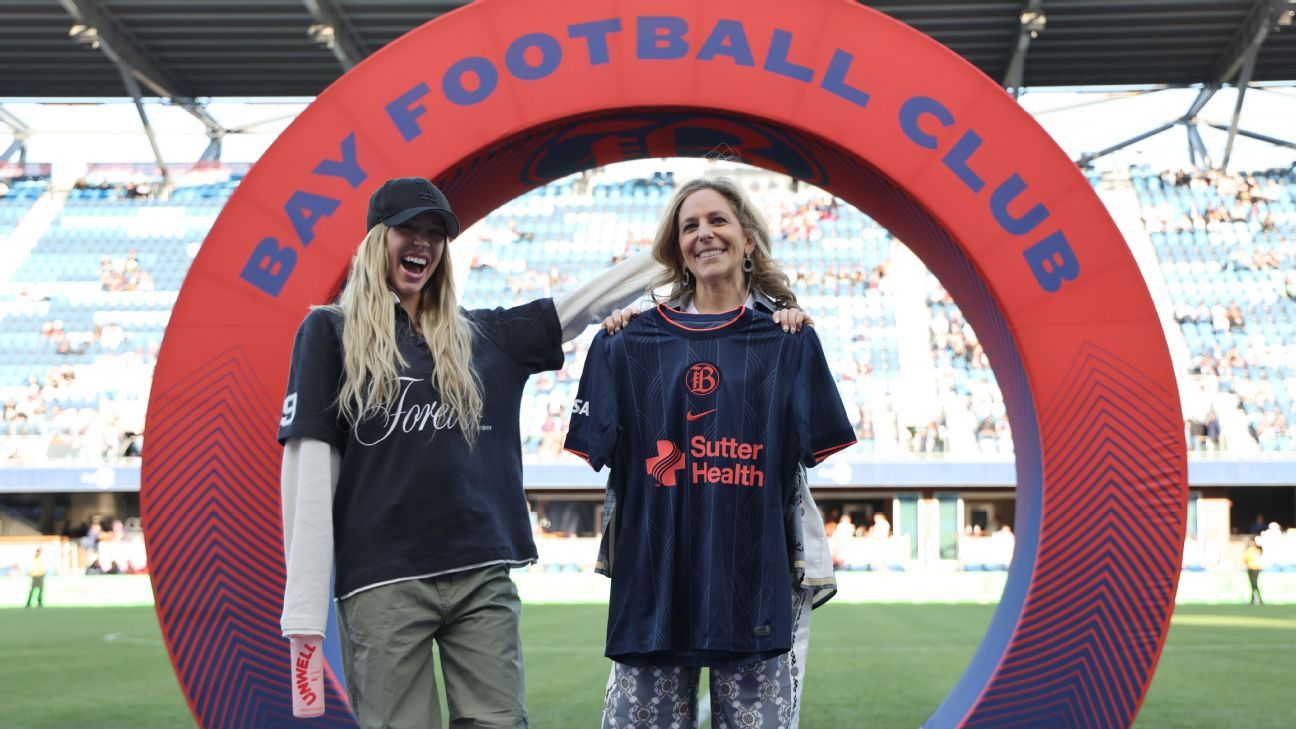
Take, for instance, last year's launch with the recovery drink brand "Unwell" that quickly fizzled out. The deal was an explicit play toward attracting Gen Z fans, as NWSL commissioner Jessica Berman said several times.
At best, the deal was awkwardly executed. The partnership included an attempt to create an "Unwell FC" branded fan section at certain NWSL matches, a concept that the independent supporters of clubs around the league vehemently rejected and found offensive. (The first attempt -- and one of the few on record -- was also horribly timed after the league's crisis around Savy King's on-field collapse.)
That "multi-year" partnership between the NWSL and the brand run by "Call Her Daddy" podcast host Alex Cooper quietly ended at some point recently. Unwell is no longer listed on the NWSL's increasingly crowded "partner" page, the drink is no longer being consumed by players on the sidelines as the NWSL's "official hydration partner," and the brand's swag no longer awkwardly sits on the heads of coaches, as it briefly did at last year's Challenge Cup. A league spokesperson confirmed to ESPN that Unwell is no longer a sponsor.
Unwell was not the first or even the riskiest sponsorship the NWSL has tried, though. The league announced a deal with cryptocurrency company Voyager in December 2021, a partnership that promised crypto-funded accounts and "crypto education" for all players. Voyager filed for Chapter 11 bankruptcy six months later and none of that ever happened.
Endless expansion has brought an influx of new money into the boardroom and, with it, new political challenges. The Boston Legacy debuted this year after nearly three years of political sparring delayed renovation of the stadium they thought they would be playing in by now. Some residents in the Franklin Park area of Boston still contest that the stadium is being illegally privatized, while Berman and Legacy ownership have lauded the partnership with Boston Public Schools as groundbreaking.
It would have been hard to imagine, even a few years ago, that an NWSL stadium would be a flashpoint in the mayoral race of a major U.S. city. At some point next year, the NWSL will find itself back in Boston proper after the Breakers folded in early 2018 -- and it will have a renovated stadium that one of its teams will (sort of) call its own.
More recently and more controversially, the NWSL awarded its 18th franchise (and counting) to Columbus hours after a hotly contested city council meeting pushed through approval of a land sale for the team to build a training facility. The land had previously been tabbed by the city to be renovated for adaptive use in an underserved neighborhood. Instead, many residents pointed out, it was given away to billionaires in a trade deal.
Berman told ESPN in the aftermath that "public-private partnerships are really important" in deciding NWSL expansion teams.
"I think it's worth noting as we think about public-private partnership that it has been for decades that communities and the public have invested in men's teams," Berman said. "We believe that that is an important piece, if you look back at history, of what has made men's teams successful in this country."
ESPN's Jeff Kassouf says "Racing Louisville FC has struggled to keep up with the expansion of the league", as sources tell ESPN the club's ownership is exploring selling a stake in the team.
Just like MLS, NWSL expansion won't stop given the economics. The entry fee for the NWSL has grown from $2 million in 2021 to $205 million this year. It rose $40 million in a mere five months between teams 17 and 18, both of which will begin play in 2028.
Commercialization plays out in much simpler ways, too, with a more direct impact on fans. The league just cut ties with Parkside, the nimble and niche trading card manufacturer that got the business category started for the NWSL. Instead, the league signed with Panini, a global empire in the collectibles business.
Panini has global distribution resources that the NWSL says will position the league and its players alongside the rest of the world's best. But it also comes at a cost for fans: as a result of the licensing change, the price for a comparable amount of trading cards will increase five-fold.
While there is no shortage of longtime NWSL fans complaining about some of these changes, the league's ambitions mean that change is inevitable. Growth does not happen by standing still.
Some of the league's most celebrated strides can be traced to the efforts to expand the NWSL's business. The world of $6,000 annual salaries -- as the NWSL had when it launched -- is gone. Players are now making largely livable -- many comfortable -- wages.
Teams are building their own stadiums and selling them out. The NWSL is home to some of the best women's soccer environments in the world. The Kansas City Current are leading that charge, and their bespoke stadium, training facility and downtown district revival is a different world from when the inaugural NWSL game was played on a high school football field with artificial turf.
Live games are now at fans' fingertips when NWSL games were once broadcast with a single camera on a low-res YouTube stream with team owners providing analysis (obligatory air quotes). Even when the NWSL managed to secure a media rights deal in the early days, it was on an obscure mobile app that sometimes rendered a black screen of death (go90: if you know, you know).
Berman has drawn criticism from fans for comments about being "incentive aligned" with constituents and being a "steward of capital," but the latter term is appropriate. She and the existing NWSL Board of Governors run the entire business that is the league. And as more people outside those walls see dollar signs and want in on the action, there are increasingly more ethical questions to ask and potential compromises -- real or perceived -- that might be made.
Private equity is not going away. The sports world's obsession with gambling continues to rear its murky head. Crypto will come knocking again. There will always be some tempting new frontier or shiny new object, a bit like a macro-level "Diderot effect for the league.
To echo the Silicon Valley-speak, there are opportunities and challenges with all of those and many more potential partners. In most cases, the NWSL can expand its footprint to consumer segments who are currently unaware that the league even exists. Ultimately, all the league's new endeavors could help grow average attendance from 10,000 to 20,000 someday, or boost TV audiences so they are consistently in the millions.
Without growth, the ceiling on the NWSL's potential is low -- too low to appeal to billionaires who want to see decades of growth ahead. Fans who have been around through the lean and dark years also don't want to restrict the league's growth -- that is antithetical to their belief in the product. So, there is inherent tension as the NWSL adopts the well-tread coaching adage that, "What got you here won't get you there."
For the NWSL, "there" -- a place with greater profits, larger viewership, new sponsors, more teams -- increasingly pushes the boundaries of that historically progressive fan base. For the fans already "here," the question is more like: At what cost?
Fans will continue pushing back on changes, but they must also accept that at least some change must take place. The NWSL was the up-and-coming indie band playing at small venues, when only the hip folks knew about it back in the day. But now, the league has made a few big hits, drawn the attention of the kitschy pop culture magazines, and scheduled a tour at big stadiums.
Some fans will keep buying tickets and reminding everyone that they are "OGs" (originals), while others will view that new reality as selling out. Neither answer is wrong. The NWSL needs those pop culture spaces as much as the sports diehard medium -- they just can't afford to ignore the latter while pursuing the former.
Every league leader knows that reality. The NWSL needs diehards and casuals if it truly wants to be a major league and a cultural force. Appeasing both sides will continue to bring uncomfortable growing pains.
Source: https://www.espn.com/soccer/story/_/id/48867238/why-nwsl-business-expansion-creates-tension-long-fans-newcomers