Why closure matters at the end of life
This article is part of a series in which we speak to individuals who – due to a unique job, location or experience – share an insight they wish others could know.
What’s the one thing people should know? A peaceful, supported end-of-life experience – focused on family, closure and environment – can transform the dying process and the way loved ones grieve.
For Caty Hollis, 61, the path to palliative care began two decades ago, when her father chose to die at his London home after a long battle with colon cancer.
At the time, Hollis was working as a nurse at the Bradford Royal Infirmary, a large teaching hospital in northern England, and she travelled down to the capital to help care for him in his final weeks.
Surrounded by loved ones, her dad, a devoted police detective, said he wished he had been more present in his three daughters’ lives – and that he had not let his work consume so much of his time.
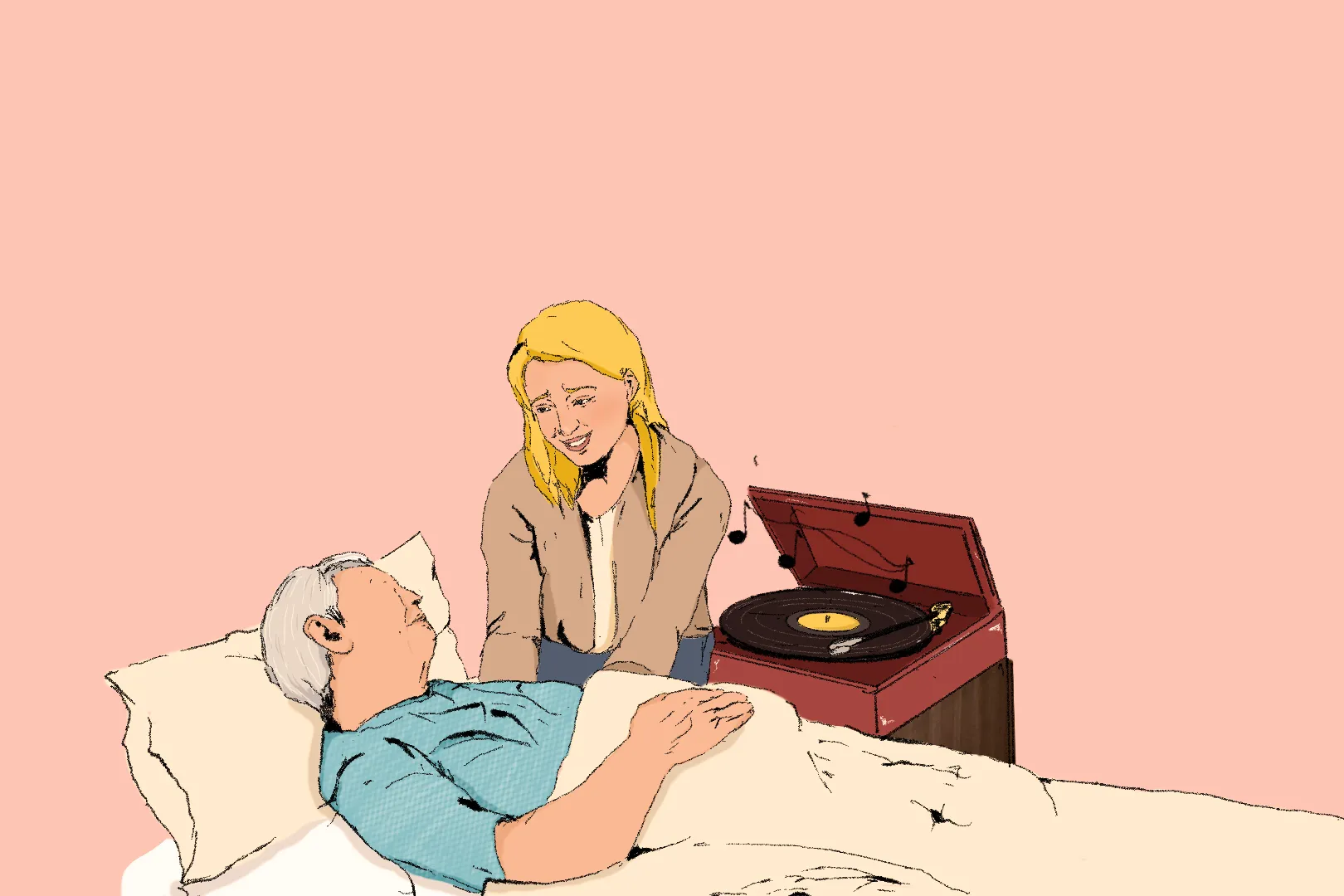
A week before he died, the family decided he would spend his final days at home, where those closest to him gathered at his bedside and filled the room with his favourite music – from Frank Sinatra’s smooth voice to the upbeat symphonic rock of the Electric Light Orchestra.
Hollis had recently taken time off from work following a miscarriage, one of several she had suffered in recent years. The latest loss had upset her father, as he wanted Hollis and her husband to experience the joy of parenthood.
In his final days, he even told her he was dying so that they could have their baby – “like a circle of life” – which, she said, brought him great peace.
At the time, Hollis’s two sisters already had children, and she often found it difficult to be around them. Because of her fertility struggles, she found it hard to spend time with their growing families – especially when her father was dying and her eldest sister was pregnant again. However, in the days before his death, she began to find comfort in her sisters’ presence.
“On the morning before he died, when he was peacefully settled but unable to communicate any longer, we spent time together discussing my sister’s baby and laughing loudly at some possible outlandish names that she and her partner might name their child. We all felt certain that Dad was able to hear us and enjoy the sound of laughter,” she said.
When he died, the comforting lyrics of James Taylor singing “You’ve Got a Friend” floated through the room – a song that will forever anchor her memories of her dad.
Watching him die, she was struck by how different it felt from the deaths she had seen on her ward.
We all felt certain that Dad was able to hear us and enjoy the sound of laughter. by Caty Hollis
We all felt certain that Dad was able to hear us and enjoy the sound of laughter.
Away from the hospital’s constant blare of machines and sterile surroundings full of strangers, he was able to spend his final hours in what she felt was a far more natural environment.
At home, the focus shifted. Instead of the urgent medical interventions of the hospital, where every effort was made to prolong life, the priority became ensuring his final moments were as peaceful as possible.
On the vascular ward, Hollis had often encountered end-of-life care, but it was largely clinical, centred on the technicalities of a patient’s last hours. Watching her father die so calmly changed her sense of what that care could look like.
So, in 2003, Hollis decided to join Marie Curie, one of the UK's largest end-of-life care charities, which provides hospice care focused less on curative treatment and more on comfort, quality of life and the emotional wellbeing of patients and their loved ones.
“They’ve already got their diagnosis. They know that their life is limited, but the important things are that they can have the right surroundings and people,” she explained.
Music, she said, plays a central role in end-of-life care, as it “can take you places that you’re not physically at … to a different place and hopefully happier times".
They’ve already got their diagnosis. They know that their life is limited, but the important things are that they can have the right surroundings and people. by Caty Hollis
They’ve already got their diagnosis. They know that their life is limited, but the important things are that they can have the right surroundings and people.
While hospital nurses can play music and address patients’ physical needs, Hollis said the most profound comfort comes when a person is surrounded by family, with disagreements set aside, conversations open, decisions shared, and a sense of peace reached together.
It does not eliminate every difficult feeling, she explained, but for families who manage to spend that time in peace, it leaves less space for guilt, misunderstanding, or conflict during the grieving process.
She said there are still cases where there is no relief or comfort, especially when caring for young patients or when someone dies in pain or distress.
Younger patients are “just not ready to die, and they fight it with everything they’ve got", she said, adding that this struggle to remain alive can deepen the distress for everyone involved.
Still, she said, most patients eventually reach a place of comfort and calm before they pass. She recalled one patient, a woman who had two daughters – one had lived with her and cared for her, but she had no contact with the other.
When the mother was admitted to hospice, the estranged daughter was informed and arrived, trying to take a leading care role. This caused significant distress for her sister and, in turn, for their mother. But with support from the medical staff and the Patient and Family Support Team, the tensions gradually eased. Both daughters began to better understand each other’s perspectives, allowing their mother to spend her final days in a more peaceful and settled environment.
At times, hospice can even be filled with laughter, according to Hollis.
“There’s a lot of reminiscing, even when the patient is unable to respond any more – you can still have a lot of ... joy, of memories, and it can be a time of real togetherness,” she said.
In the last 24 to 48 hours of their lives, patients are usually unresponsive and unable to speak, but nurses still encourage loved ones to continue talking to them, because it is widely believed that hearing is the last sense to fade.
Hollis’s work has also made her acutely aware of what she said may sound cliché – the urgency to live now, and not put things off for later.
“I’m very much for travelling and living in the moment… as much as I love my job, I get my holidays in, and I get to see my kids… I have friends all over the place, and I make sure I have holidays with all of them,” she said firmly.
In the end, Hollis hopes her clients will see that the arguments, silences and stubborn standoffs that feel so immovable in life will fall away at the bedside.
That reconciliation, she said, is the truest comfort – the thing that lets a person die peacefully, and lets those who love them live on without regret.
For Hollis, her father’s perspective on his death giving way to a child for her turned out to be true.
“When I became pregnant again,” she said, “my baby was due exactly a year to the day after my dad’s death. She turns 25 this summer".
Source: https://www.aljazeera.com/features/longform/2026/7/4/why-closure-matters-at-the-end-of-life?traffic_source=rss