US economic restrictions have strained the island’s already fragile economy, prompting blackouts and medical shortages.
The United States has announced another round of economic sanctions against Cuba, this time targeting nine state-owned mining, metal and construction companies.
A notice posted on the US Treasury Department’s website on Thursday showed Cuba’s Ministry of Construction of Cuba among the sanctioned entities, as well as government-controlled import companies.
list 1 of 3‘To play God’: Cuba’s healthcare system collapses under US pressure
list 2 of 3US diplomat Rubio targets Cuban military officials, companies in sanctions
list 3 of 3Seven decades of US regime change efforts: What have they achieved?
Enterprises that extract and trade the island’s minerals, like the mining group GEOMINSAL, were also on the list. Cuba holds significant deposits of cobalt and nickel.
In addition to the nine entities, three leaders at the Cuban Institute of Friendship with the Peoples (ICAP), a state organisation designed to foster international relations, were sanctioned as well.
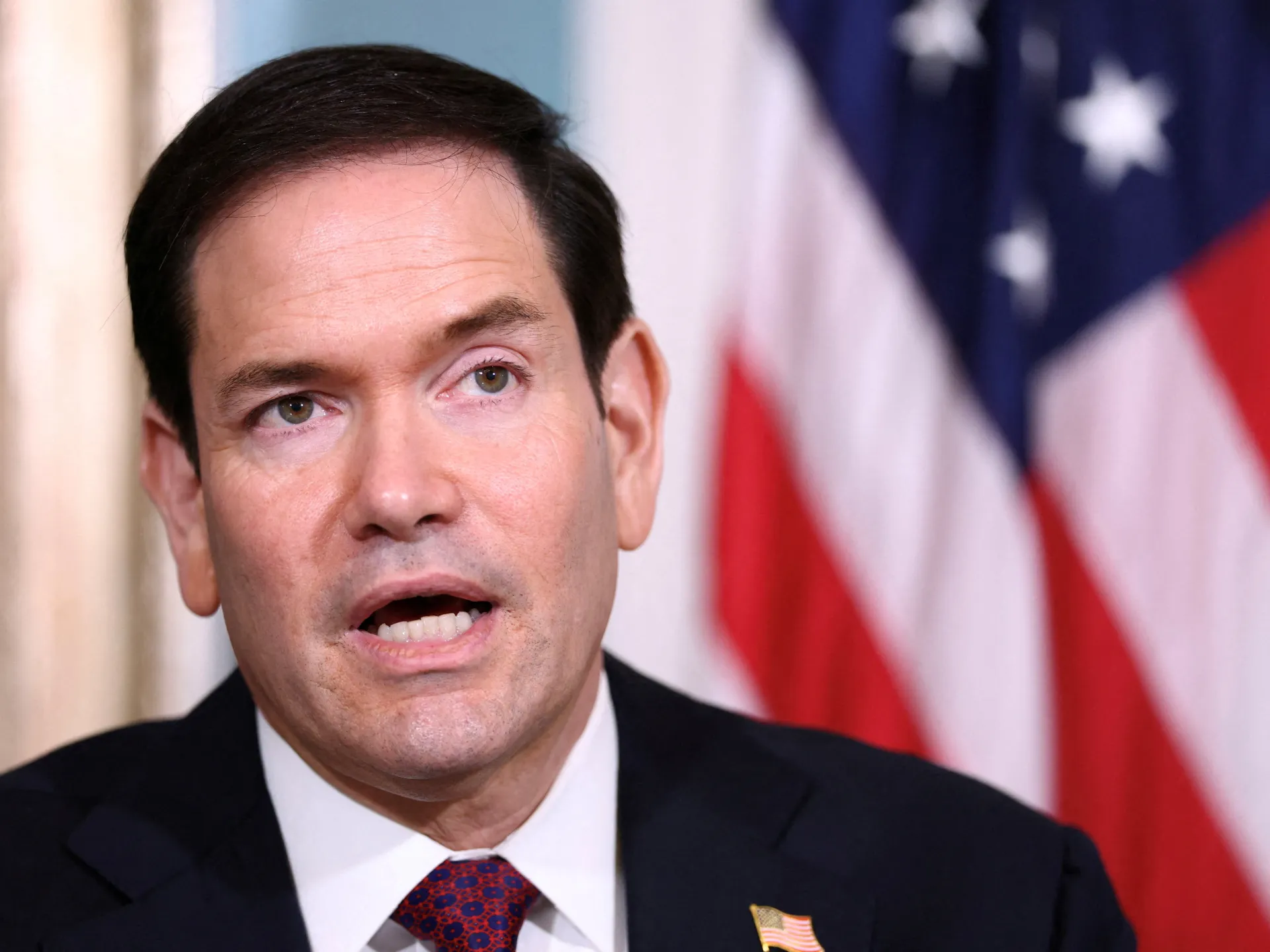
The administration of US President Donald Trump portrayed the targeted individuals and groups as national security threats in an accompanying statement, written by Secretary of State Marco Rubio.
Rubio, a longtime proponent of government change in Cuba, accused the mining and construction companies of helping to “sustain the regime’s repressive apparatus”.
He also blasted ICAP for allegedly organising a “subversive network” of “international sympathisers” to help Cuba’s government.
“The Trump Administration will not stand by while a hostile foreign power seeks to exploit our freedoms — none of which are afforded to its people — by misleading and corrupting American citizens with lies, spy tradecraft, and other malfeasance,” Rubio wrote.
He added that ICAP’s activities help Cuba with its goal of “exporting Marxism, racial resentment, and Communist violence across the world”.
While the US has long sought to isolate Cuba over political differences, the Trump administration has pressed forward with a “maximum pressure” campaign designed to topple the island’s government.
Following the military operation to abduct and imprison Venezuelan President Nicolas Maduro on January 3, Trump has turned his sights to Cuba, an island roughly 145 kilometres, or 90 miles, from the US state of Florida.
Since the mid-20th century, the island has been been governed as a socialist state under the one-party rule of the Communist Party of Cuba.
In remarks earlier this year, Trump indicated that, once the US-Israeli war against Iran reaches an end, “Cuba is next” for regime change.
He has floated ideas including a “friendly takeover” of the island, and his administration has conducted negotiations with Cuban officials. Media reports have suggested he sought, at one point, the resignation of Cuban President Miguel Diaz-Canel.
To heighten the pressure on Diaz-Canel’s government, his administration has implemented a series of withering measures meant to destabilise the Cuban economy.
Among them has been a de facto fuel blockade that began in January. Trump cut off Cuba’s supply of oil from Venezuela and proceeded to threaten any country that exports fuel to the island with tariffs. Only one oil tanker, from Russia, has docked at the island since.
In May, Trump also unveiled a new executive order authorising his government to impose far-reaching sanctions on those “responsible for repression” in Cuba. Thursday’s economic measures cite that order as justification.
Trump’s pressure campaign has contributed to energy blackouts and shortages of crucial goods, including medicine, on the island.
United Nations officials have warned that such conditions could trigger a humanitarian crisis. In March, for instance, a group of UN experts warned that the fuel blockade amounts to an illegal form of “energy starvation“.
The following month, UN Human Rights Commissioner Volker Turk pointed to accelerating infant mortality rates, as well as a decline in survival among children with cancer. He warned that the growing restrictions against the island are fuelling those health outcomes.
“The fuel restrictions imposed since early 2026 and recent tightening of extraterritorial sanctions, taken together, are directly harming Cubans, especially the most vulnerable,” Turk said in a statement. “These sanctions must be lifted immediately.”
But the Trump administration has argued that Cuba poses a national security threat to the US, thereby necessitating the sanctions.
Source: https://www.aljazeera.com/news/2026/8/20/us-pummels-cuban-economy-with-new-sanctions-on-mining-construction?traffic_source=rss