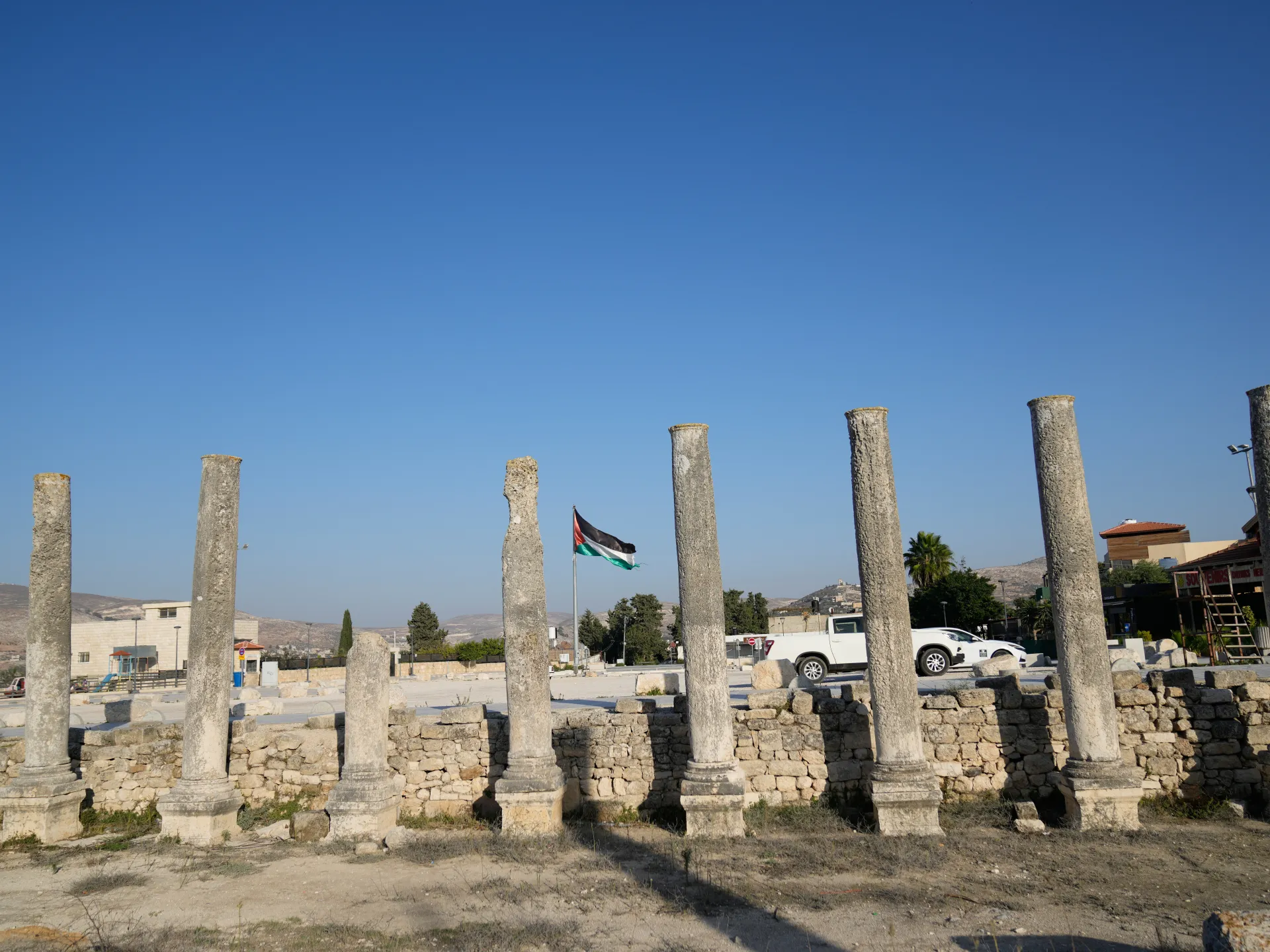
Sebastia in the occupied West Bank and five Lebanese castles get emergency listing despite Israeli objections.
UNESCO has added sites in the occupied West Bank and Lebanon to the list of endangered World Heritage sites, despite Israeli objections.
A committee vote on Friday at a UNESCO meeting in Busan, South Korea, placed six locations on both the main World Heritage list and the endangered list at once, under an emergency procedure, citing the toll of the ongoing conflicts in the region.
list 1 of 3Rebuilding Gaza to cost $71bn, must include Palestinians, report finds
list 2 of 3US court affirms release of pro-Palestine scholar as legal battle continues
list 3 of 3Israel’s illegal settlements are Europe’s credibility test
The locations include a biblical archaeological site in the West Bank and five castles in southern Lebanon, one of which was recently seized by Israeli troops.
Member states of the UN’s cultural agency approved the listings despite a campaign by Israel’s foreign ministry to have them rejected.
The West Bank site, Sebastia, sits on a hilltop near Nablus and is identified by historians as ancient Samaria, capital of the biblical Kingdom of Israel.
Its ruins span the Iron Age through Roman, Byzantine and Islamic rule, and Christian and Islamic tradition holds that John the Baptist is buried there.
Palestinian officials first sought the listing in 2012, arguing the site needed protection as Israeli authorities pushed ahead with plans to expropriate roughly 200 hectares (500 acres) of surrounding land for a national park.
That project would add a fence, entry fees and a road restricted to use by Israelis, bypassing the Palestinian tourism trade built around the ruins.
In Lebanon, five fortresses in the Mount Amel region were listed, among them Beaufort Castle, a medieval stronghold captured by Israeli forces in May during their war with Hezbollah.
Lebanon’s culture ministry said Israeli bombardment had already destroyed one of the five, Shamaa Castle, and threatened Beaufort itself.
Israel disputes this, alleging Hezbollah turned Beaufort into a military position with tunnels beneath it.
A Lebanese delegate rejected that claim, insisting the castles have served only tourism since Israeli troops withdrew from the south in 2000.
The dispute reflects a wider rift between Israel and the United Nations agency, which Israel left in 2019 accusing it of bias and now attends only as an observer.
Israel’s foreign minister said the West Bank listing sought to erase “the Jewish connection to this land”.
A Palestinian delegate credited Sebastia’s residents with protecting the site “despite occupation, restrictions” and repeated attempts to sever their ties.
Earlier this week, the ancient Lebanese city of Tyre was also added to the endangered list.
An Al Jazeera investigation comparing satellite images from January to June this year found a deliberate pattern of land-clearing and demolition across the town.
Source: https://www.aljazeera.com/news/2026/7/24/unesco-places-occupied-west-bank-lebanon-sites-on-endangered-heritage-list?traffic_source=rss