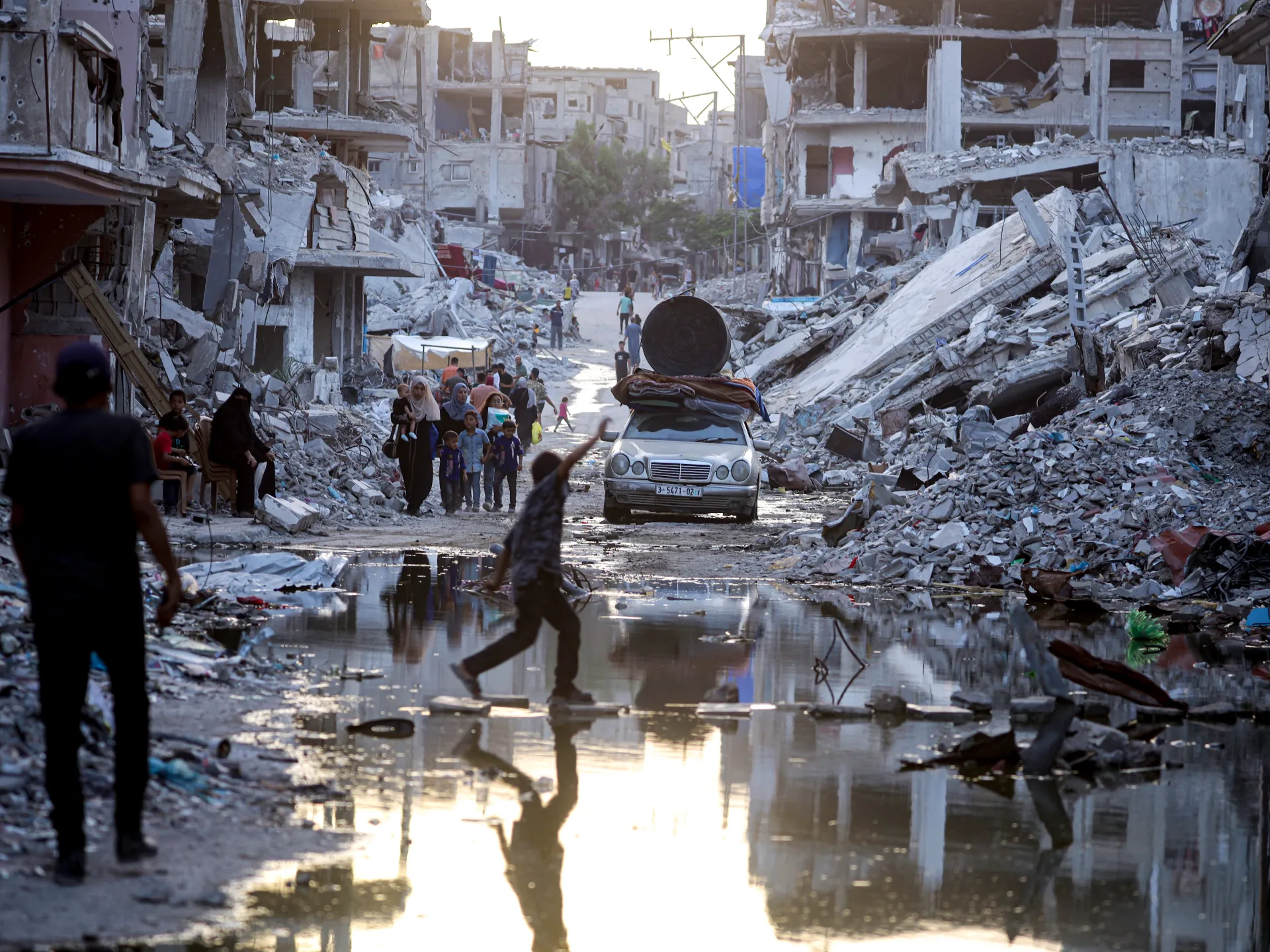
The Israeli government cannot insulate its citizens from the impact of the ecocide it wrought onto the strip.
Earlier this month, Israeli Prime Minister Benjamin Netanyahu and representatives of the Board of Peace agreed to set up a working group on sanitation and public health affecting both Israel and Gaza. Its membership and detailed operating structure are yet to be made public.
It appears it has finally dawned on the Israeli authorities that the consequences of the unrelenting ecocidal destruction of Gaza were eventually going to hit Israel. The toxic leftovers of war – untreated sewage and contaminated rubble – are now a problem for Israeli public health as well.
Gaza shares the Mediterranean, coastal ecosystems and coastal aquifers with Israel. The destruction of its electric power and sanitation infrastructure forces over 100,000 cubic metres of raw, untreated sewage into the Mediterranean Sea or on land every day. Because in this part of the Mediterranean currents move primarily from south to north, this waste is carried straight up the coast into Israeli waters.
The Ashkelon desalination plant in southern Israel has been forced to shut down multiple times due to high faecal bacteria contamination from Gaza’s wastewater. Raw sewage also triggers toxic algae blooms blocking and damaging desalination filtration systems, as well as creating dead zones where fishing would normally happen.
Wastewater toxins, heavy metals and pathogens are absorbed by local marine life. Because fish migrate across maritime boundaries, contaminated seafood poses a direct health hazard to Palestinian as well as Israeli consumers. Raw sewage carries the same pathogens afflicting Gaza into the shared marine environment. Its northward drift directly impacts Israeli coastal cities.
Although pathogens can persist and migrate under certain conditions, pathogen contaminated groundwater is unlikely to feed into Israeli municipal water supplies, but can still affect the shared aquifer and surrounding environment.
Salts and other chemical contaminants can travel much farther and are often a bigger long-term aquifer concern. They can contaminate a shared groundwater system and reduce the quality and usability of the aquifer over time for irrigation, agriculture and drinking.
Israel has recently also begun moving some of the estimated 60 million tonnes of rubble from Gaza into undisclosed locations inside Israel and the West Bank, potentially transferring the pollutants in that rubble directly to disposal or storage sites. In recent weeks, Euro-Med Monitor tracked some 100 Israeli trucks daily leaving the Gaza Strip with debris.
Transferred pollutants may include heavy metals, such as lead, mercury, cadmium and traces of other metals or residues from specialised munitions, as well as white phosphorus particulates, unspent explosives, industrial chemicals, and widespread asbestos fibres from pulverised older buildings. Heavy metals present in dust and rubble may exhibit carcinogenic, mutagenic, teratogenic, neurotoxic, nephrotoxic and bioaccumulative properties, posing long-term human health and environmental risks.
The rubble also contains biological matter, pathogens and fluids from decomposing human remains and accumulated organic waste, as well as insects, rodents, and other disease vectors. Airborne transmission of hazardous dust particles, asbestos fibres and particulate matter degrades the quality of the air while hidden unexploded ordnance in the debris can cause a detonation risk and soil toxicity.
When managing highly contaminated disaster debris, international agencies such as the UN Environment Programme (UNEP) and regional environmental authorities like the Gaza Debris Management Working Group (DMWG) stipulate transfers must follow strict protocols and operational procedures to isolate hazards, including an immediate freeze on all operations if human remains are detected. Moving these materials across borders or jurisdictions should also trigger legal frameworks and rigid groundwater protection standards.
Critics have pointed out that bulldozing sites that contain mass graves is destroying key evidence of genocidal crimes. But apart from that, this transfer of debris in disregard of international rules and regulations is putting at risk the health of people around collection and disposal sites.
If the aim of this structural disparity is to keep Israeli groundwater zones tightly protected and shift the long-term burden of aquifer and soil pollution onto Palestinian communities in the West Bank, it ignores the risks to the Israeli transfer personnel and to all people living there, which includes 700,000 illegal settlers.
This is not a problem that the genocidal war created. Environmental groups such as EcoPeace have long warned that the shared environment creates total interdependence, meaning humanitarian and sanitation crises in Gaza directly compromise Israel’s public health.
Back in 1990, the former Jerusalem Mayor Teddy Kollek candidly admitted that his administration had done little for East Jerusalem beyond extending basic water and sewage lines out of fear that cholera outbreaks in neglected Arab neighbourhoods would spread to West Jerusalem.
Even if Israel is morally incapable of meeting its human rights responsibilities as occupiers to solve the sanitation crisis, it should understand that if it does not strictly follow environmental protocols, its own population will endure the same consequences as the Palestinians whose welfare it callously and criminally disregards.
The views expressed in this article are the author’s own and do not necessarily reflect Al Jazeera’s editorial stance or the Galilee Foundation’s views.
Source: https://www.aljazeera.com/opinions/2026/8/30/the-toxic-waste-of-the-gaza-war-has-reached-israel?traffic_source=rss