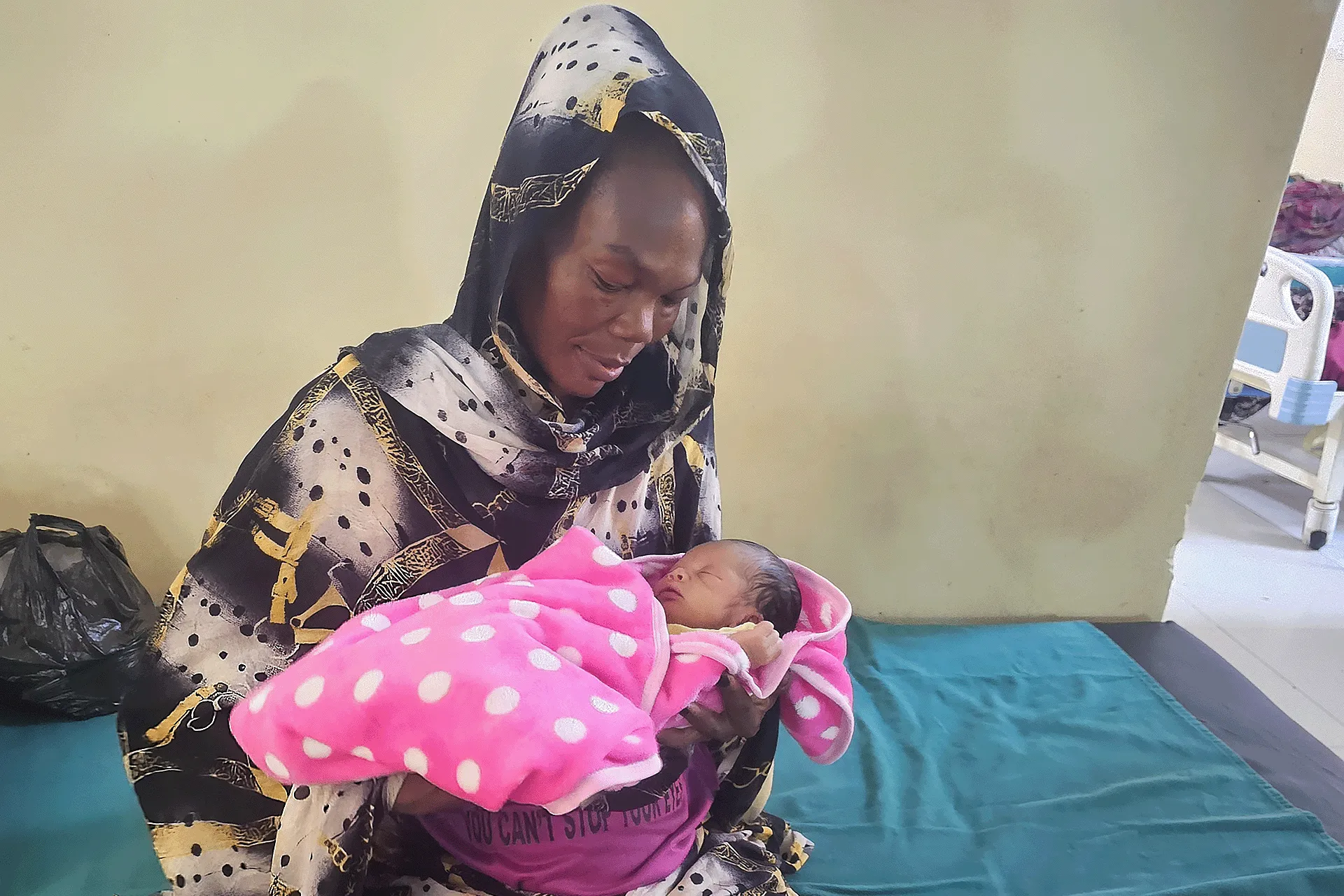
After years of closure due to war, hospitals in the Sudanese capital are welcoming mothers again, despite lingering economic and logistical hurdles.
In the Sudanese city of Omdurman, the maternity hospital, known locally as Al-Dayat or ‘Midwives” in English, has resumed operations after a long closure caused by the war. Mothers are once again arriving at maternity wards, navigating difficult economic and logistical conditions to give birth safely.
Al-Toma Jabara, a mother from East Nile, gave birth to her daughter, Doaa, at the hospital two days ago. She told Al Jazeera that she was unable to conceive during the war years. Fighting between the Sudanese armed forces and the Rapid Support Forces (RSF) separated Jabara from her husband for two years.
She has lived under constant bombardment and clashes in her home, making a normal family life seem impossible. She described Doaa’s arrival as a “new beginning” for her family after years of fear and deprivation.
At Bahri Hospital, Fatima Abdel Rahman, a mother from Al Jazirah state, recounted her exhausting and expensive journey to the capital Khartoum. Her family had to spend a large portion of their income on transportation and temporary accommodation near the facility to monitor her condition post-delivery.
Abdel Rahman noted that medication shortages forced her to buy basic drugs from outside pharmacies at inflated prices, adding to her financial burden. However, she stressed that the functioning maternity ward provided her with a vital sense of safety, sparing her the fear of dying due to lack of medical care – a constant dread she lived with during the war.
During the conflict, the closure of specialised maternity hospitals forced many women to undergo unsafe home births or travel long distances, drastically increasing risks for both mothers and infants. An anonymous official from the Khartoum State Ministry of Health confirmed that maternal and infant complications and mortality rates surged during the war due to closures.
The official told Al Jazeera that complication rates are now gradually decreasing as services resume. The health ministry has repaired and reopened 15 maternity wards across the capital, including Al-Dayat and the Saudi Hospital. The capital’s hospitals are now recording a significant increase in births, reaching about 7,000 new deliveries per month.
Emad Abdullah, director of the Omdurman Maternity Hospital, noted that it initially received only one or two cases a day upon reopening. Today, that number has climbed to approximately 60 births per day, as services expand to meet growing demand.
The hospital has several vital departments, including a caesarean section, an intensive care unit and a neonatal department equipped with about 140 incubators, making it the largest in Sudan.
Maternity costs vary significantly depending on the facility. At government hospitals, a natural birth typically costs about 130,000 Sudanese pounds ($216), while C-sections cost around 400,000 pounds ($666). In private hospitals, the cost of a natural birth shoots up to approximately 500,000 pounds ($813) and C-sections range between 600-800,000 pounds ($999-1,322), depending on the service level.
Despite the reopening of wards in Khartoum, Omdurman and Bahri, large challenges remain with patients from distant regions such as Al Jazirah and Kordofan facing exhausting journeys and exorbitant transport costs.
In the hospitals, there is a shortage of basic medicines and emergency rooms often operate beyond their capacity. In addition, the wartime exodus of doctors and nurses has left a critical gap in qualified staff, while essential medical equipment needs regular maintenance to keep up with demand.
Amira Othman Abdel Majeed, an infection control officer at Bahri Hospital, described the war as the most challenging period for the health sector, marred by severe shortages of supplies, electricity and water. That has imposed psychological pressure on medical staff who feared losing mothers and children during treatment.
However, she said the “liberation of Khartoum” and the resumption of maternity services have dramatically changed the landscape. Staff emerged stronger and more resilient, with the ongoing medical care serving as a prime symbol of the capital’s recovering health sector.
Source: https://www.aljazeera.com/features/2026/7/6/sudans-maternity-wards-reopen-bringing-hope-amid-post-war-struggles?traffic_source=rss