Rising global costs of fuel and fertiliser, driven by shipping disruptions in the Strait of Hormuz, are forcing Mexicans to tighten budgets and cut back consumption.
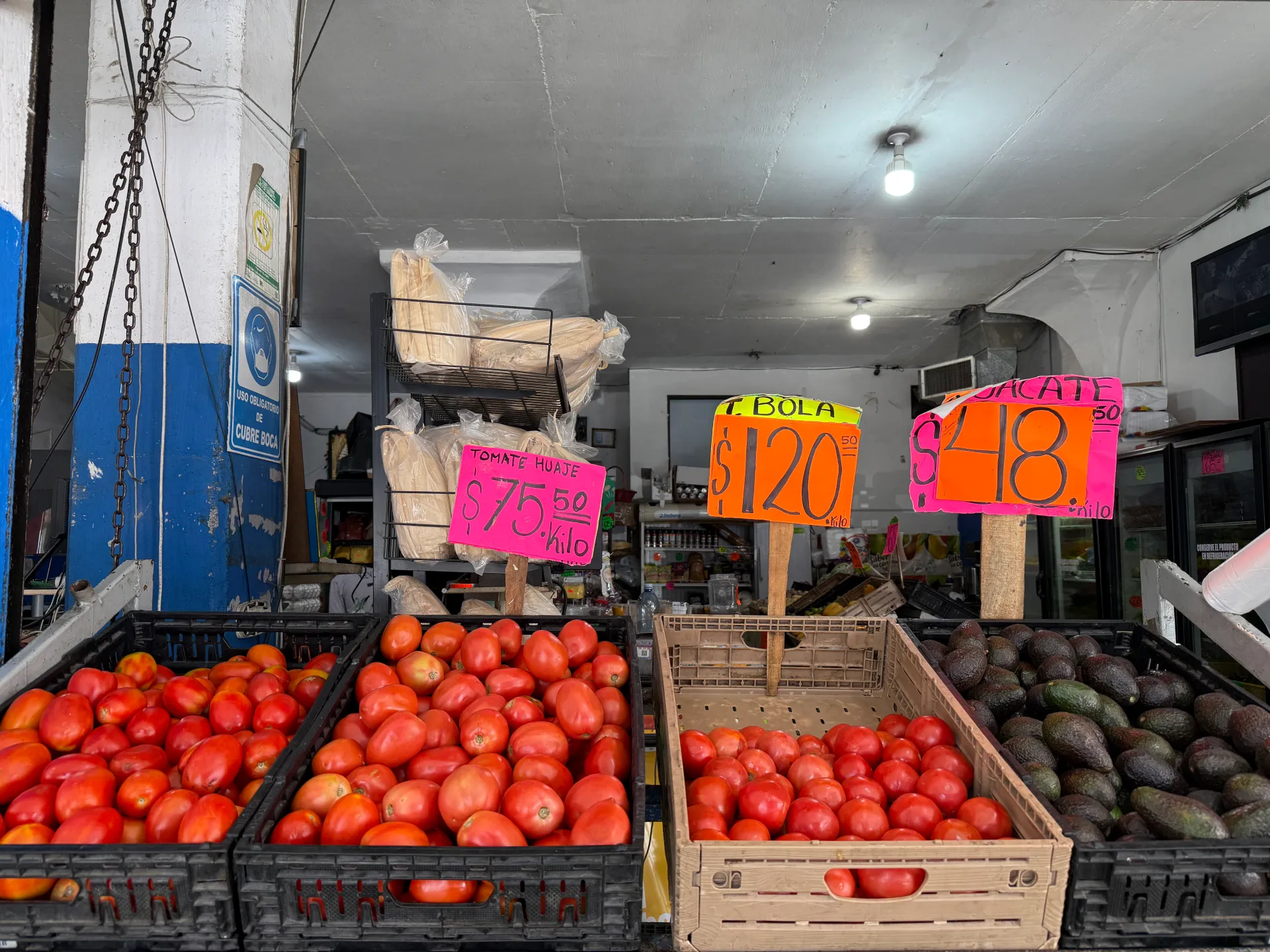
Monterrey, Mexico – At the Mercado de Abastos, a wholesale food market in Nuevo Leon, Mexico, staples like tomatoes, potatoes, beef, and chillies have seen steep price hikes in the last few weeks, forcing customers to change their shopping habits and tighten budgets, while vendors cut profit margins or risk losing customers.
“You have to buy them anyway; they’re things you use daily,” said Cesar Ramirez, a 66-year-old retiree at the market.
list 1 of 4Kevin Warsh sworn in as new US Fed chair
list 2 of 4US says temporary visa holders should leave to apply for Green Cards
list 3 of 4Bolivia in crisis: Social unrest, demands for president to resign escalate
list 4 of 4‘Everest Man’ breaks his own record after historic 32nd climb
While shop owners cite rising fuel prices, high costs in the agricultural sector, and growing extortion and theft on Mexico’s highways, international pressures are mounting. Rising global costs of fuel and fertiliser, driven by shipping disruptions in the Strait of Hormuz, are impacting Mexican producers and threatening a stable food supply, especially for low-income residents.
Elvira Pasillas, professor at the Western Institute of Technology and Higher Education (ITESO), noted that low-income households spend nearly 70 percent of their earnings on food. “Not only are they struggling to meet minimum nutritional requirements, but they are also spending almost all of their income on food,” she added.
According to INEGI, the national statistics agency, 12-month inflation stood at 4.45 percent in April, with the consumer price index rising 0.20 percent in March. The cost of the basic food basket in urban areas rose 8.1 percent in March, outpacing general inflation, Pasillas said.
Guillermina Delgado, a 62-year-old housewife, said she has begun rationing her shopping, buying only what is strictly necessary each week. “There’s not one single thing that is cheap any more,” she said. When possible, she visits the Mercado de Abastos.
Delgado also cares for her mother, increasing the financial strain on her husband, a construction worker and the family’s sole breadwinner. Mexico has a high rate of informal labour, which reached 54.8 percent in March. At the same time, Mexico’s gross domestic product (GDP) fell by 0.8 percent for the first quarter, a lower growth than expected.
“We have an economic stagnation reflected in a much more precarious labour market, with rising inflation and much higher food inflation,” said Pasillas, also a consultant in economic analysis. “This is already generating a greater problem for people’s wellbeing.”
Rising energy prices driven by the US-Israel war on Iran are also pushing up the costs of logistics and transportation.
Fabian Dominguez, the manager of the meat shop El Bodegon, told Al Jazeera that pork and beef prices have risen since the beginning of the year. The Mexican Meat Council reports that beef prices rose by 16.5 percent in January.
The spike is attributed to a series of factors, including the end of tariff exemptions on imports from Brazil and Argentina, as well as a screwworm outbreak that has disrupted cross-border trade. These supply pressures come as meat consumption in Mexico grew at an average annual rate of 4.5 percent between 2020 and 2025.
Dominguez said their beef comes mainly from southern Mexico, Canada, and the US. He attributed the price surge on the rising fuel prices, due to the Iran war, and roadblocks set up by either criminal groups or protesters.
In recent months, protests by farmers and truck drivers have caused major logistical delays. Protesters are demanding lower fuel costs and improved security, as theft and extortion by organised criminal groups increase across the country’s highways and rural areas. And as global grain prices plummeted, Mexican producers have been protesting grain imports and demanding that the federal government guarantee minimum prices, similar to the price cap currently applied to fuel.
Despite being an oil producer, Mexico imports more than half of its gasoline and 75 percent of its natural gas from the US. Seeking to mitigate the rising oil prices, the Mexican government renewed its voluntary agreement with retailers and reduced the fuel tax.
However, Pasillas warned that these subsidies would reduce tax revenue and strain public finances.
“This will also affect overall spending, and will particularly strain social programmes, especially those benefitting the poor,” she added.
Juan Carlos Anaya, founder of the data analytics company Agricultural Market Consulting Group, noted that security threats, such as extortion, robberies, and protection rackets, are hampering commercial activity and driving up logistical costs. Cuauhtemoc Rivera, president of the Alliance of Small Merchants (ANPEC), added that extortion affects every link of the supply chain, from farmers to corner-store owners.
In January, Mexican authorities arrested Cesar Sepulveda Arellano, alias “El Botox”, the alleged mastermind behind the murder of Bernardo Bravo, a prominent leader in the lemon sector in Michoacan.
The National Agricultural Council commended the action in a statement: “Insecurity in the countryside and in supply chains not only puts food producers at risk, but also impacts final product prices, distorts markets, and threatens the timely supply of food for the entire Mexican population.”
Dominguez explained that his clients, mostly business owners, were reluctant to pass these costs onto the end consumers because, often, the consumers do not want to pay more. He said his shop has already seen a 25 to 30 percent drop in sales compared with last year.
Meanwhile, Graciano Rico, manager of a produce shop that opened a year ago at the market, said they made the decision to cut their profit margins nearly in half to prevent losing newly acquired customers.
“If we raise prices too much, they’ll leave and resent it, and we’ll lose customers,” he said.
Shop owner Ilda Castro said the record-high prices for tomatoes, potatoes, and chillies are driving customers, who are bearing the brunt of the impact, to price-hunt across multiple stores. Castro noted that the price of tomatoes has surged from 20 pesos ($1.15) to as much as 75 pesos ($4.33) per kilogram (2.2lbs).
“We heard that, in the United States, they’re paying $65 for a 25-pound box, which is over 1,000 pesos. Logically, any producer prefer to send their tomatoes there,” she said.
Last year, the US government imposed a 17 percent tariff on Mexican tomatoes, citing “unfair trade practices”, as Mexico accounts for about 90 percent of US fresh tomato imports. Anaya, of the Agricultural Market Consulting Group, called the tariff unfair, noting that, while dumping was never proven, the tax forced major producers in Sinaloa to scale back planting.
Carlos Ramirez, manager of a store that primary supplies produce to restaurants and taco shops, said clients are turning to canned tomatoes or serving smaller portions of salsas – a staple of the taco business – to cope with the rising prices.
Production costs are also rising, partly due to soaring global fertiliser prices, as Mexico imports 70 percent of its needs. Between January and March, prices for urea increased by 47 percent, diammonium phosphate by 57 percent, and mono ammonium phosphate by 54 percent – all primary ingredients in fertiliser – according to data from the Agricultural Market Consulting Group.
However, Pasillas warned that the full impact will be seen long-term, due to harvest cycles.
While several factors affect food prices, Anaya said that the primary issue was the widening price gap along the supply chain.
“The margin between the consumer and the producer is alarming,” he said. “What can we do along the supply chain?”
The Package Against Inflation and Expenditure (PACIC), a voluntary pact between the Mexican government and participating companies, aims to stabilise food costs by capping a basket of 24 essential items at roughly 910 pesos ($45). Rivera, from ANPEC, argued that although the programme was designed to provide a food basket for the most vulnerable and economically disadvantaged households, it was failing to reach them.
“The PACIC food basket is sold in modern retail channels – Walmart, Soriana, and Chedraui – In other words, in supermarkets and chain stores, precisely the places where this population cannot afford to shop and does not want to go,” Rivera said.
Source: https://www.aljazeera.com/economy/2026/5/23/rising-global-costs-threaten-mexicos-production-costs-and-food-stability?traffic_source=rss
World
Rising global costs threaten Mexico’s production costs and food stability
Article Top Ad Zone
Article Middle Ad Zone
Article Bottom Ad Zone
Original Source: www.aljazeera.com
Get World alerts on Telegram
Follow World in your language and open the full stories on PulseForge.
Join on TelegramShare
Comments
Comment system is currently disabled.