Jeff CarlisleJun 10, 2026, 06:50 AM ET
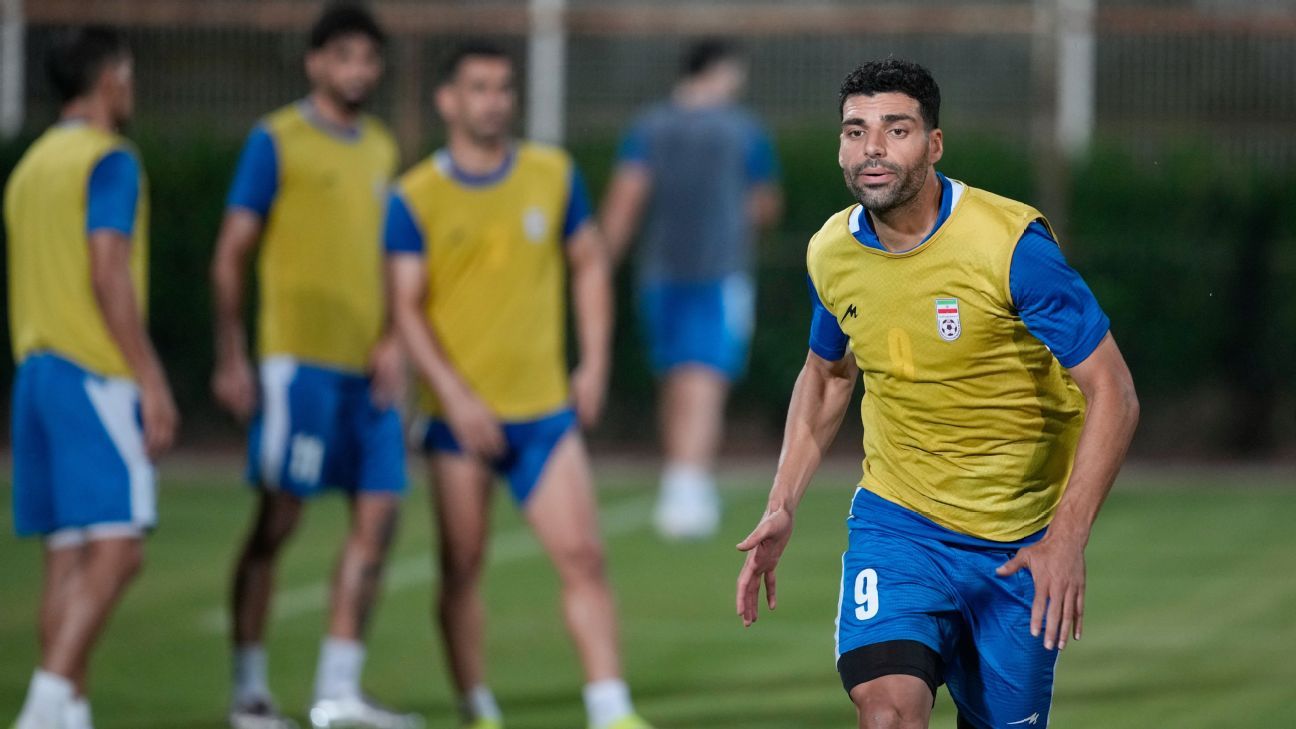
TIJUANA, Mexico -- Iran national team forward Mehdi Taremi said that steps the U.S. government has taken regarding the denial of visas and preventing a Somali referee from entering the country are hurting the country's image and creating a "lot of tension" around the World Cup.
The team's participation in the World Cup, which begins on Thursday and will be jointly hosted by the United States, Mexico and Canada, has been complicated by the Iran war.
Iran arrived at their training camp in Mexico on Sunday morning from the Turkish city of Antalya on a private jet.
Team Melli were originally going to have their World Cup training base in Tucson, Ariz., but at FIFA's suggestion, agreed to move their site to the Mexican border city of Tijuana.
While the move allowed Iran's entire contingent of players and staff to travel to Mexico, 14 staff members were denied visas to enter the United States.
All three of Iran's group stage games will be held in the U.S.
"I've been to three World Cups and they always say once you get off the plane and you enter the host country, there's just a unique atmosphere of friendliness and global-ness," Taremi, who was part of the Inter Milan team that lost last season's Champions League final, told ESPN with the help of a translator.
"Unfortunately, I'm not feeling it right now. There's a lot of tension right now in this World Cup. You feel it in the atmosphere and unfortunately, it's because of actions like [visa denials]. Maybe that's just my personal feeling."
Iran play their first two games in Inglewood, California, against New Zealand on June 15, and Belgium six days later. They then head to Seattle to face Egypt on June 26.
Iran and the U.S. could meet in the round of 32 on July 3 in Arlington, Texas, if both teams finish second in their groups.
Iran Football Federation vice president Mehdi Mohammed Nabi was among those Iran officials denied visas.
Nabi told ESPN via a translator that Iran was still working with FIFA to resolve the visa issue.
"The team consists of not just the players and the coach, but also supporting people -- technical staff, management. We are all a team as one," he said.
"So FIFA, we're still pursuing [the visas]. FIFA has acknowledged that, and we're still looking into this. Hopefully it gets resolved in the next few days. There should be no discrimination in a sport. Everyone should be treated equally and hopefully this is resolved soon."
Iran's preparations for the World Cup have been significantly disrupted by the war that began on Feb. 28 when Israel and the U.S. engaged in airstrikes against Iran.
Iran has since responded with attacks on U.S. military bases in the region, as well as civilian and energy infrastructure in countries such as Bahrain, Kuwait, Oman, Qatar, Saudi Arabia, and the United Arab Emirates.
Since the outbreak of the war, the Iran domestic league was shut down, sending the national team to neighboring Türkiye for training. Iran's participation in the World Cup was in doubt for several months, but FIFA has all along insisted that Iran would participate, and that looks to be the case. Nabi said Iran are fully focused on the World Cup.
"We don't allow our players to get distracted. [They] stay focused on the game," Nabi said. "Our players are professional and they focus on the training and regimen and the program we have and they don't get distracted by the things that are happening outside."
But forward Alireza Jahanbakhsh told ESPN that the war has made focusing on the World Cup challenging.
"It's been very difficult, I'll be honest with you, for every single one of us with the whole situation," Jahanbakhsh told ESPN.
"You have to keep checking on your family, on your loved ones, on your people back home and of course it's affecting the group."
He added, "As Team Melli, we try to do everything to make our people happy, especially in this situation."
Iran will play two of their group stage games in the Los Angeles area, which is home to approximately 140,000 Iranian expatriates.
A sizable contingent of that community opposes the current Iranian government, and flies the pre-revolutionary flag. Taremi said he hoped the community would cheer on Team Melli, and that he was playing for Iranians everywhere.
"Obviously some people outside Iran, in the war, maybe they are against the government, but we are all Iranian," Taremi said in English.
"We are united and we are looking for the peace. I think they will come there to support us and we have to make them happy and bring joy for them."
In addition to the dispute over visas, the Iran football federation said on Tuesday that FIFA revoked the ticket allocation for Iran fans at the team's three World Cup games in the United States.
Iran's allotment of tickets for supporters was to be 8% of stadium capacity.
A source with knowledge of FIFA's approach told ESPN that because of the economic sanctions applied by the U.S. against Iran, the U.S. Office of Foreign Asset Control (OFAC) prevents U.S.-based entities such as the FIFA26 organizers from processing transactions involving residents of Iran.
This includes the sale of Iran's allotment of tickets to the team's fans. FIFA is attempting to allow fans of Iran that live outside the country to be able to purchase tickets from Iran's allocation.
"FIFA is working closely with the IR Iran Football Federation to identify compliant solutions that maximize opportunities for Iranian supporters to attend matches," FIFA said in a statement.
Iran's ambassador to Mexico said on Saturday that the squad had been notified that, under their visa conditions, the team must enter and leave U.S. soil on the same day as their matches.
But an Iran football federation spokesman told ESPN that this wasn't the case.
For the team's opening match against New Zealand, the team will fly into Los Angeles on June 14, and then depart the day after the match.
Similar arrangements have been made for Iran's remaining group stage matches.
Source: https://www.espn.com/soccer/story/_/id/49017941/iran-players-say-us-visa-policies-create-world-cup-tension