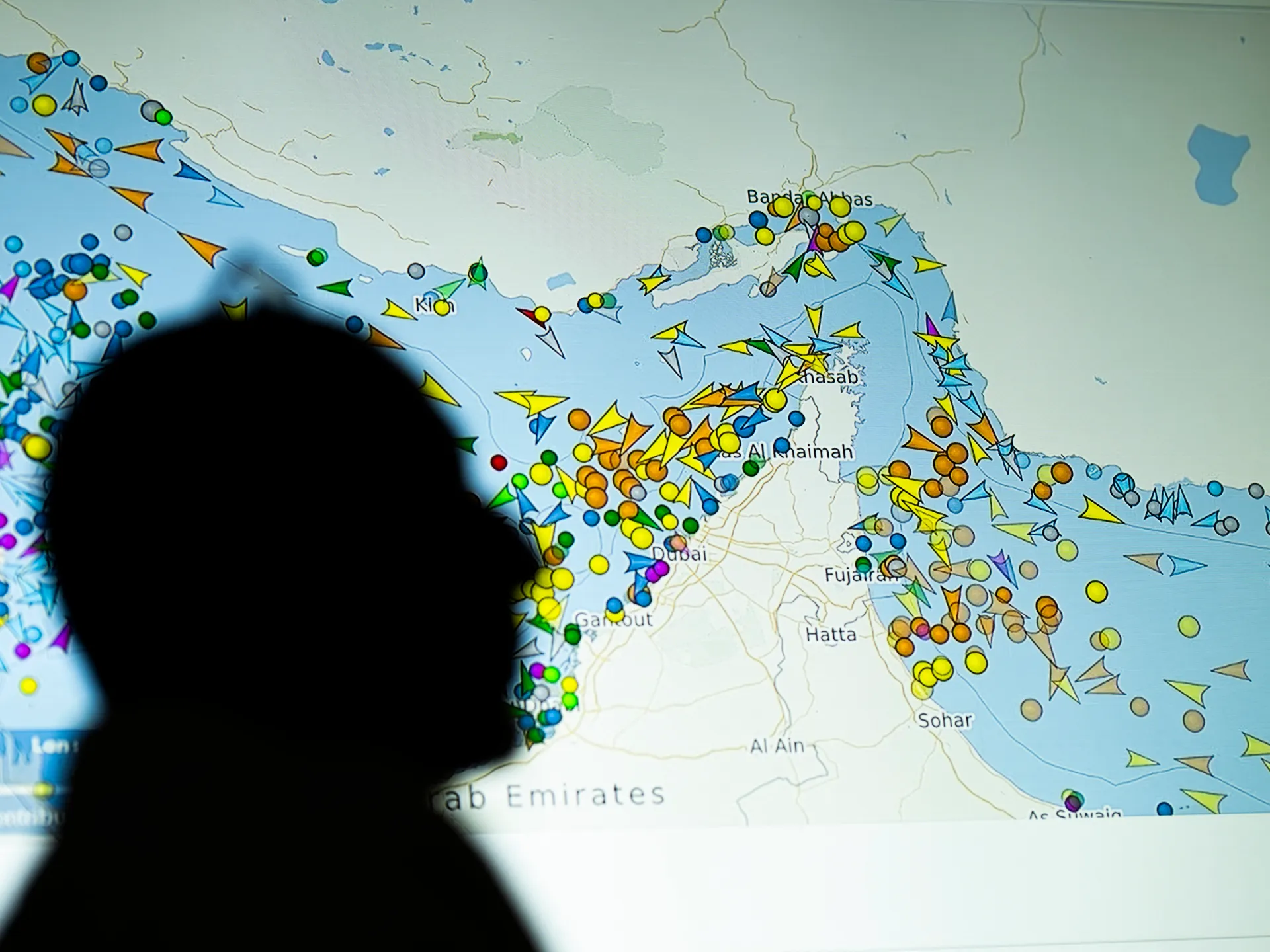
Oman’s proposal is based on the Strait of Malacca in East Asia, a model whereby ships that use the strait provide voluntary fees.
Iran and Oman have exchanged proposals regarding the future management of the Strait of Hormuz, as points of contention continue to exist between the two nations whose territorial waters border the strategic waterway.
Oman presented a proposal to Iran for a joint regional mechanism to manage the Strait of Hormuz with “voluntary fees”, Reuters reported on Tuesday. Under the Omani proposal, which reportedly has regional backing, Iran would not exercise sole control of the strait, an unnamed Gulf source and Western diplomat told the news agency.
list 1 of 4What lies ahead for Iran’s economy as scope of US war grows beyond Hormuz?
list 2 of 4Why has the US halted its bombing of Iran?
list 3 of 4Hopes of return to diplomacy as US, Iran hold fire for third day
list 4 of 4Trump says ‘good chance’ of progress in Iran talks. What we know
Oman’s proposal is reportedly based on the Strait of Malacca, which connects the Indian and Pacific Oceans. There, Indonesia, Malaysia and Singapore ask ships that use the strait to voluntarily contribute to fund navigation, environmental protection, and search-and-rescue operations.
This proposal aims to contribute to ending the global disruption to trade caused by the strait’s closure in the US-Israeli war on Iran. Tehran, however, says the strait cannot go back to its pre-war status where shipping flowed freely,
In comments to Iranian state media on Tuesday, Kazem Gharibabadi, the country’s deputy foreign minister for legal and international affairs, said Tehran rejects an Omani proposal for an equal division of transit routes between the two countries, as such a plan does not address Tehran’s security concerns.
Gharibabadi said that Tehran proposed to Oman that Iran would manage shipping through its side of the strait and Muscat would manage part but not all of the opposite lane.
He added that Tehran has “no plans to negotiate with the US”, but affirmed talks are proceeding “step by step” with Oman, warning that Tehran will consider “any action” to maintain control over the strait, including the resumption of war.
“The Omanis are now suggesting three lines for the maritime traffic: one that runs through Iran’s territorial waters, an international one, and one through Omani territorial waters,” said Al Jazeera’s Resul Serdar, reporting from Tehran. “Despite public statements, our sources tell us Iran is demonstrating some flexibility.”
Al Jazeera’s Tohid Asadi, also reporting from Tehran, said there remain many “points of contention” between Oman and Iran on Hormuz. These include the trajectory of the ships, the fees, the question of who will define the arrangements, and mine clearances – which will reportedly be Iran’s responsibility.
Paul Musgrave, a professor at Georgetown University in Qatar, said Oman’s proposal to Iran to get the Strait of Hormuz running again is positive, but it remains to be seen if hardliners in Iran will go for it.
Musgrave noted that under the Strait of Malacca model, voluntary contributions raise about $70m annually, far from the $1m per ship that’s reportedly been proposed by Tehran as a “service fee” in the Strait of Hormuz.
Meanwhile, Gulf Cooperation Council (GCC) foreign ministers met via video call on Tuesday to discuss the latest developments in the conflict, including ways to improve cooperation on issues surrounding freedom and navigation through the waterway, a statement from the Qatari Foreign Ministry said.
The United States suspended a nearly two-week-long campaign of air strikes against Iran over the weekend after pressure from regional mediators to find a diplomatic solution and to return to the memorandum of understanding signed in June, which would allow shipping to resume in the Strait of Hormuz. The strait carried one-fifth of global energy supplies before the February 28 start of the US-Israel war on Iran.
Source: https://www.aljazeera.com/news/2026/7/28/iran-and-oman-exchange-proposals-to-manage-strait-of-hormuz?traffic_source=rss