The semifinals are now behind us, with plenty of key moments and incidents to digest ahead of Sunday’s final.
After 102 games over five weeks, the FIFA World Cup is down to the first all-Spanish-speaking final since the inaugural tournament in 1930.
And, for the first time, the title game will match the reigning World Cup and Copa America champions, Argentina, with the current European champions, Spain.
list 1 of 4‘We are unique’: How Argentina overcame England to reach World Cup final
list 2 of 4Celebrations erupt in Argentina’s capital after World Cup semifinal win
list 3 of 4‘Epic squared’: Scaloni lauds Argentina’s back-to-back World Cup comebacks
list 4 of 4Tuchel defends tactics after Argentina send England packing from World Cup
In the semifinals, France made life easy for Spain by conceding an early penalty in La Roja’s 2-0 win.
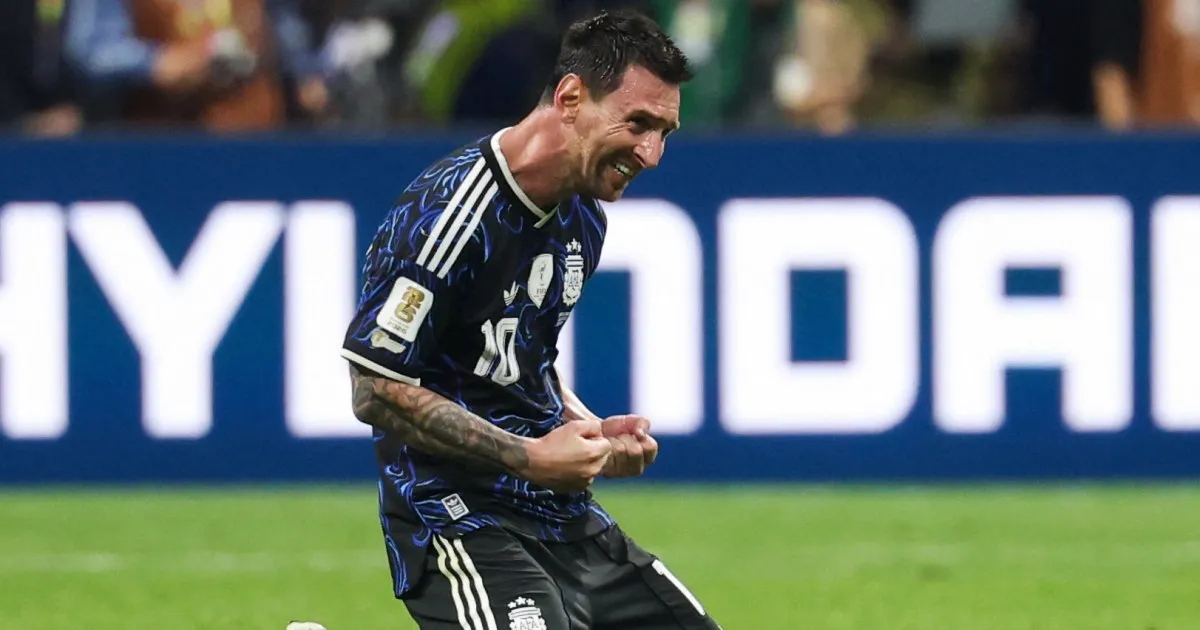
England made things difficult for Argentina before their late defensive shell game cracked open. La Albiceleste’s 2-1 victory sent the Three Lions away with their tails between their legs.
Here are the key takeaways from the semifinals:
A day after his 19th birthday, Lamine Yamal outfoxed France left back Lucas Digne, earning a penalty kick. Spain gratefully accepted the gift, Mikel Oyarzabal converting in the 22d minute. Plenty happened in this match – won by Spain 2-0 – but nothing more consequential than Digne booting Yamal, after apparently being caught by surprise while attempting a clearance.
Meanwhile, as Dani Olmo, Rodri and Fabian Ruiz bossed the midfield, Marc Cucurella and Pedro Porro shut down the wings.
That meant Pau Cubarsi and Aymeric Laporte only had to contain Kylian Mbappe. Unai Simon advanced out of the penalty area a couple of times – stopping a hypersonic Mbappe, then retreating to stymie Desire Doue.
Porro’s 58th minute goal upped the advantage. And Spain’s keepaway tactics made holding off the tournament favourites seem relatively easy.
Spain have improved since an opening 0-0 draw with Cape Verde, partly because of the addition of Olmo to the midfield. Luis de la Fuente also had Olmo on the bench at the start of Spain’s 2024 Euro championship run, before Olmo got in the lineup and scored or produced game-winning plays in four games.
Hardly anything went right for Didier Deschamps in his 186th game in charge of France.
Maybe Deschamps stayed on too long; Les Bleus were unlucky, or they simply are not as competent or versatile as the co-favourites. In any case, Deschamps will be in charge of the third-place game, before ex-superstar player Zinedine Zidane takes over.
As is often the case in the World Cup, European teams are unused to non-UEFA officiating, and Deschamps questioned the level of Salvadoran referee Ivan Barton post-game. But the time for that is earlier, and it is done behind the scenes by federation officials.
Yes, a Central American referee will often call it differently from a European counterpart. So, Deschamps probably should not have been taken off guard when Adrien Rabiot was issued a yellow card, and once Rabiot was cautioned, Deschamps was not going to risk leaving him in. But Deschamps also might have been taking a chance with Aurelien Tchouameni, who appeared less than full speed after a thigh injury. So much for France’s central midfield.
Then, there is the vaunted France attack.
Deschamps had Michael Olise drop deep to escape Rodri, but it turned out he was too deep to be effective. Substitute Rayan Cherki changed the pace, but too late. Bradley Barcola could not get past Porro. Replacement Desire Doue had a chance, with Simon far out of the goal, but shot directly at Simon, instead of chipping him.
There was little Deschamps could do about William Saliba, who departed in the first half with a back problem.
Argentina seemed overly dependent on Lionel Messi during its first five games. Messi totalled eight goals, but close calls against Cape Verde and Egypt revealed La Albiceleste’s vulnerabilities.
Then came the quarterfinals, and Messi set up a goal, but Argentina did not need him to convert in an extra-time win over Switzerland. La Albiceleste were, maybe, becoming less Messi-dependent.
The semifinals, and, again, no goals from Messi – which meant waiting until the 85th minute for Enzo Fernandez to equalise against England.
What led to Fernandez’s score was his willingness to try his luck from a distance, rather than deferring to Messi.
Fernandez fired high twice, but zeroed in the third time. Messi set up Fernandez from the right wing and, so, England started sending two defenders at him in the final minutes (including 12 stoppage-time minutes). No luck, though. Messi simply crossed right foot for Lautaro Martinez’s winner.
That’s a goal or assist in 11 successive World Cup games for Messi going back to 2022, extending the longest tournament streak in at least 60 years.
It was an emotional result for Argentina forwards Lautaro Martinez and Giuliano Simeone, who teared up during post-match interviews.
Martinez said he had dreamed of scoring “this goal” since the day his father bought him his first pair of shoes.
Simeone said he was shocked to learn he would be in the starting lineup, only his second appearance in the World Cup.
Locking it down defensively worked fine for England against Mexico and Norway.
Against Argentina, Thomas Tuchel went to a five-man back line in the 72nd minute, just after a water break. Even with Ezri Konsa, plus Dan Burn and Nico O’Reilly, England could not hold the lead, though.
One way to unlock a packed-in defence is long-distance sniping, which Mexico and Norway lacked, but Tuchel might not have counted on Fernandez.
As for a counterattacking threat, it disappeared when Anthony Gordon was taken off, allowing Argentina to push everyone into attack for the final half hour (which included 12 minutes of added time).
Tuchel was also questioned for not using Marcus Rashford sooner or Bukayo Saka at all. They might have created a chance for a second goal or, at least, helped relieve Argentinian pressure on the wings.
Source: https://www.aljazeera.com/sports/2026/7/16/fifa-world-cup-2026-biggest-takeaways-from-the-semifinals?traffic_source=rss