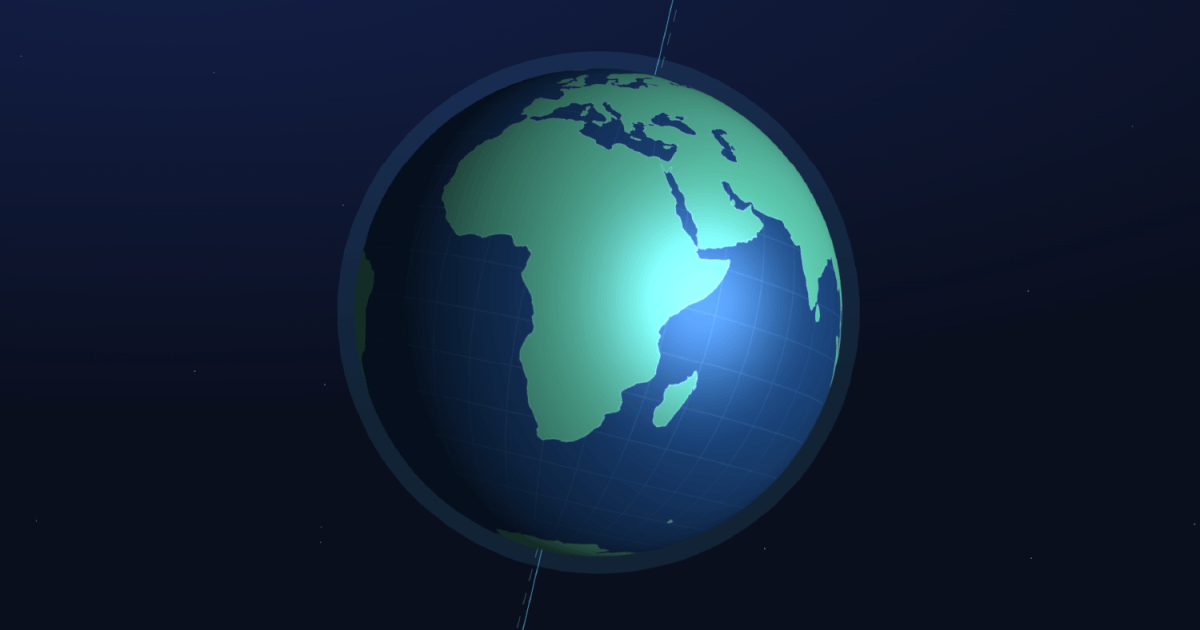
Timekeepers add a leap second occasionally to keep our clocks and the Earth’s rotation in tune. That could now change.
The world’s timekeepers are meeting on Thursday near Paris to decide whether to scrap the “leap second”, which could disconnect the clocks we use from the Earth’s rotation and realign timescales.
The world’s clocks are designed on the idea that the Earth completes one rotation on its axis in exactly 24 hours. But it actually wobbles, making the time the Earth takes to rotate less exact. And over time, the Earth’s rotation is gradually slowing.
list 1 of 3Scientists urge tighter AI controls to prevent global cyber risks
list 2 of 3Chinese hackers impersonated AI experts to target US policy minds
list 3 of 3Which countries have sent people to space?
To compensate for that, since 1972, timekeepers have added a leap second every few years – the last one was added in 2016 – to keep clocks and Earth’s rotation in synchronisation.
But pressure has been mounting to scrap the leap second since it complicates matters for financial markets and data centres, which rely on precise timing down to milliseconds.
So what is a leap second? Could it be scrapped? And how might it change our understanding of time?
Clocks work based on Coordinated Universal Time (UTC), the global standard that has been based on high-precision atomic clocks for more than seven decades. Atomic clocks mark time by observing the vibration of atoms.
But the Earth’s rotation works independently of atomic clocks.
A leap second is a second added periodically to UTC to make it synchronise with the Earth’s rotation. The first leap second was added to world clocks in 1972.
There have been 27 leap seconds added so far with the previous leap second being added on December 31, 2016. No further leap seconds have been added since.
According to the National Institute of Standards and Technology (NIST), a nonregulatory federal agency of the United States Department of Commerce, leap seconds occur at the end of December or the end of June. The NIST also cites differences between the precision of the atomic second and the Earth’s rotation to explain the need for a leap second.
“The speed of the Earth’s rotation is not constant. …. This gradual decrease in the rotational rate is causing the duration of the mean solar second to gradually increase with respect to the atomic second,” the NIST added.
While leap seconds close the discrepancy between the Earth’s rotation and UTC, their addition has posed challenges for technology companies, financial markets and other businesses that depend on precise timings.
In 2012, LinkedIn and Reddit crashed after the addition of a leap second. The same year, ticket bookings for Qantas, the Australian airline, collapsed after the leap second was added.
Three years later, the Australian Securities and Investments Commission also issued a warning against it. And in July 2022, engineers at Meta said: “Every leap second is a major source of pain for people who manage hardware infrastructures.”
With pressure mounting, the International Bureau of Weights and Measures, which has the French acronym BIPM, voted in 2022 to scrap the leap second by 2035. But countries like Russia have wanted to push the implementation date back to 2040. Russia incorporates leap seconds directly into its GLONASS satellite-navigation system, so delaying the scrapping of leap seconds would buy Russia time to update its satellite systems.
Despite Moscow’s concern, the 69 member states of BIPM are now meeting on Thursday in Versailles outside Paris to debate and vote on a resolution to scrap the leap second by 2027.
According to the BIPM, the timekeeping authorities of countries around the world will discuss three proposals at Versailles.
First, they will consider whether atomic clocks are still the most accurate device when it comes to measuring what constitutes a second. Optical frequencies are now in fact more precise than atomic clocks. If a proposal to change how time is measured is accepted, the second might have a new definition, characterised by optical frequencies rather than the vibrations of atoms.
The second, most significant proposal pertains to dumping the leap second.
And finally, the third proposal on the table is a pitch to synchronise time measurements on Earth with a new time standard that NASA is developing for the moon.
Proposals that are accepted are expected to come into effect from May 20, 2027, World Metrology Day.
If the leap second is scrapped, then it means our clocks will no longer be tied to the Earth’s rotation.
According to the NIST, if this happens, “then adjustments would have to be made to time stamps and legacy equipment and software which synchronise to UTC for astronomical observations.”
“Some proposals have been made to implement larger corrections like leap hours, which would occur much less often than leap seconds,” it added.
Scientists said human routines will not be impacted and software glitches, data server crashes and network failures for financial markets will be eliminated with the abandonment of leap seconds.
But over a period of centuries, the gap between the Earth’s cycle and our clocks will become more apparent: By 2100, clocks will be ahead of the Earth by 54 seconds. In another two millennia, that gap would have widened to several hours. The result? Sunrise and sunset times that would feel out of sync with people’s natural rhythms today.
Source: https://www.aljazeera.com/news/2026/10/15/clock-ticking-for-leap-second-why-timekeeping-could-change-forever?traffic_source=rss