Roberto Lopes, who was famously recruited to play for Cape Verde via a DM on LinkedIn, has been one of the breakout stars at the 2026 FIFA World Cup.
But while 'Pico' has been helping to put the African islanders on the map by pushing Lionel Messi and world champions Argentina all the way to extra time in the round of 32, his club side Shamrock Rovers are already gearing up for the new UEFA Champions League campaign.
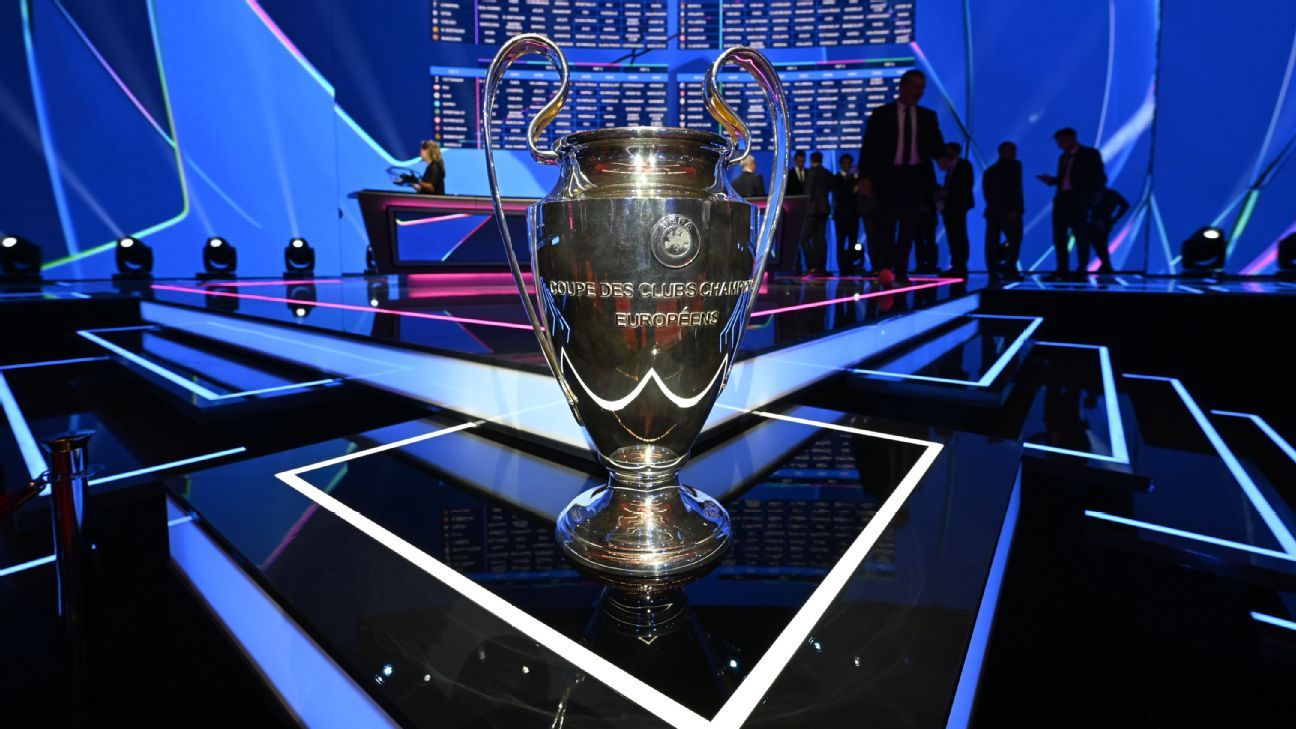
The first qualifying round for Europe's top club competition begins on Tuesday -- a mere 38 days after Paris Saint-Germain's victory over Arsenal in last season's final, and long before the big names enter the fray in 2026-27.
A number of less-heralded clubs from all corners of the continent will be in action, all with their own fascinating backstories. So who are they? From the Imps to the Saints to the Vikings, let's meet some.
- Revenge for 'Disgrace of Gijón': World Cup's biggest grudge match - Meet the soccer team that plays all of its games tomorrow - Welcome to 'Tehrangeles': Watching Iran with L.A.'s Iranian community
After languishing in Luxembourg's third division in 2023, the club rose rapidly with back-to-back promotions and then became national champions for the first time last season thanks to a slender win over title rivals Differdange on the final day. In the process, they became only the second European club -- after Bulgarian giants Ludogorets -- to go from third tier to national champions in three seasons.
Their rise can be largely attributed to footballer-turned-construction entrepreneur Carlos Teixeira, who built the stadium complex in Bissen and was later persuaded to take on the club presidency by the local mayor over a bottle of wine. Teixeira, who made the bold call of replacing his own brother Pedro as head coach last summer, has recruited shrewdly. But arguably his biggest asset has been his ability to offer players jobs -- a major incentive in a semi-pro league like Luxembourg, where other work is often required to supplement income.
The reigning national champions of Bosnia-Herzegovina hail from the Republika Srpska, the Serb-majority entity in the north of the country. Their success has made them a major source of pride for local supporters in a country that has long seemed on the brink of splitting along ethnic fault lines, where matches between sides representing Bosniaks, Croats and Serbs have often carried intense political weight and, at times, spilled into violence.
The Red & Blues have won the Bosnian Premier League twice in the last three seasons, but their greatest accomplishments have come on the continental stage. They became the first club from their country to reach the knockout phase of a European competition the season before last, beating Slovenia's Olimpija Ljubljana in the UEFA Conference League knockout-round playoff before succumbing to Austria's Rapid Vienna in the round of 16.
There are two clubs in Romania that claim to be the true historical successor of the original Universitatea Craiova, which became champions in 1991. That year marked the beginning of a long divorce between the sports club and its football section that eventually resulted in the emergence of two rival teams: CS Universitatea Craiova and FC U Craiova 1948. Both now lay claim to the same history and have developed a fierce rivalry as a result.
Last season could hardly have been more different for the two teams. FC U Craiova 1948 were first hit with a mammoth 106-point penalty and then kicked out of all competitions by the Romanian FA due to financial issues. Meanwhile CS Universitatea Craiova, the true successor club in the eyes of the courts, won the SuperLiga for the first time since that 1991 title and participated in the league phase of the Conference League, just failing to qualify for the knockout phase on goals scored.
The Kazakhstan club became the easternmost team ever to play in the group or league phase of the Champions League last season, requiring Real Madrid to make the trip to the city just a few hours' drive from the Chinese border. Their isolated position meant they set the all-time record for the biggest cumulative distance covered to play their league-phase games (28,000 miles) -- with their travels including a respectable 3-2 loss at Arsenal -- and broke the record for the competition's longest-ever away journey when they travelled to Lisbon to face Sporting CP, a round trip of 8,950 miles).
The campaign ended in disappointment for Kairat, who suffered some heavy defeats and finished bottom of the 36-team league phase with just one point. And with their 17-year-old star striker Dastan Satpaev joining Premier League club Chelsea this summer, the long road to qualification could be more challenging this time around.
With no land point more than five kilometers from the sea, the Faroe Islands are exposed to winds so strong that FIFA introduced a rule especially for the archipelago. When a set-piece is awarded, a teammate may hold onto the ball so that it does not get carried off course. In recent years, however, it is KÍ Klaksvík who have been blowing away the competition in this picturesque island nation. Their defeat to 07 Vestur last month was the first time they have lost a league match in more than two years.
Spurred on by their star forward Árni Frederiksberg, one of several part-time players in the squad, Klaksvík enjoyed a memorable 2023-24 European campaign and made friends across the continent by inviting visiting fans for tea. They finished bottom of their Conference League group -- but not before becoming the first Faroese club to win a European group or league phase match (against Olimpija Ljubljana) and holding French Ligue 1 side Lille to a goalless draw.
Based in Gibraltar, a British Overseas Territory at the foot of the Iberian peninsula and the smallest UEFA member state by surface area (4.2 square miles), Lincoln Red Imps are the ultimate example of a big fish in a small pond. Named after English Championship club Lincoln City, they have been the dominant force on the domestic scene for decades, winning the Gibraltar Football League 30 times and the Rock Cup 21 times overall.
The Red Imps have carried that national success onto the continental stage too, becoming the first club from Gibraltar to reach the group or league phase of a European competition in 2021-22 and repeating the feat in 2025-26 (Conference League on both occasions). But their biggest splash came in the Champions League qualifying rounds a decade ago, when they claimed a famous 1-0 victory over Scottish giants Celtic in 2016 at their stadium in the shadow of the Rock of Gibraltar. They lost on aggregate, but showed that Gibraltarian clubs are capable of cutting it at the highest level.
While Hollywood-owned Wrexham are one of five Welsh clubs competing in the English football system, the cross-border phenomenon also works the other way: The New Saints, the perennial champions of Wales, are based in Shropshire, England. That -- along with their continued domestic dominance and their outspoken owner Mike Harris -- has made them rather unpopular with the fans of rival clubs in the Cymru Premier.
Often called TNS for short, they have completely dominated the Welsh game since the turn of the century, racking up 18 league titles and becoming the first club to represent Wales in the group or league phase of a European competition in 2024-25 (Conference League). They also broke the European record for the most consecutive top-flight wins (27) in 2016, eclipsing a record that had been set by Dutch giants Ajax 44 years earlier.
Vardar are among the most unpredictable clubs in top-flight European football. While they have won 12 league titles in North Macedonia (more than twice as many as any domestic rival), they have also suffered two relegations. Their first demotion, in 2010-11, led to one of the most curious scenarios in modern European football history: Vardar finished in the drop zone but bought the license of promoted club Miravci, kept their place in the top flight as a result and stormed to the league title the very next season.
There was no such escape in 2020-21, when they shockingly went down as reigning champions. Yet true to their volatile nature, Vardar have since returned to the summit of the domestic game. After gaining promotion back to the top flight in 2023, they improved season by season and were ultimately crowned champions last term.
The Icelandic champions have a unique claim to fame, having been founded in 1908 by a group of local children in Reykjavík. Chairman Axel Andrésson was the senior figure on the board at the ripe old age of 12, while nine-year-old Emil Thoroddsen served as secretary and 11-year-old Davíð Jóhannesson was the treasurer. They were a talented bunch, too, dropping points in only one youth match in the first 10 years of their existence.
Since entering the senior national championship in 1918, the Vikings have largely lived in the shadow of their fellow capital clubs -- and it was not until over a century later that they began to dominate domestically, racking up three league titles and four domestic cups in the last seven years. They also became the first Icelandic club to qualify for the league phase of a European competition in 2024-25, reaching the knockout phase of the Conference League and claiming a famous home win over Panathinaikos before bowing out on aggregate in Athens.
Source: https://www.espn.com/soccer/story/_/id/49254165/imps-saints-vikings-action-2026-27-champions-league-kicks-off